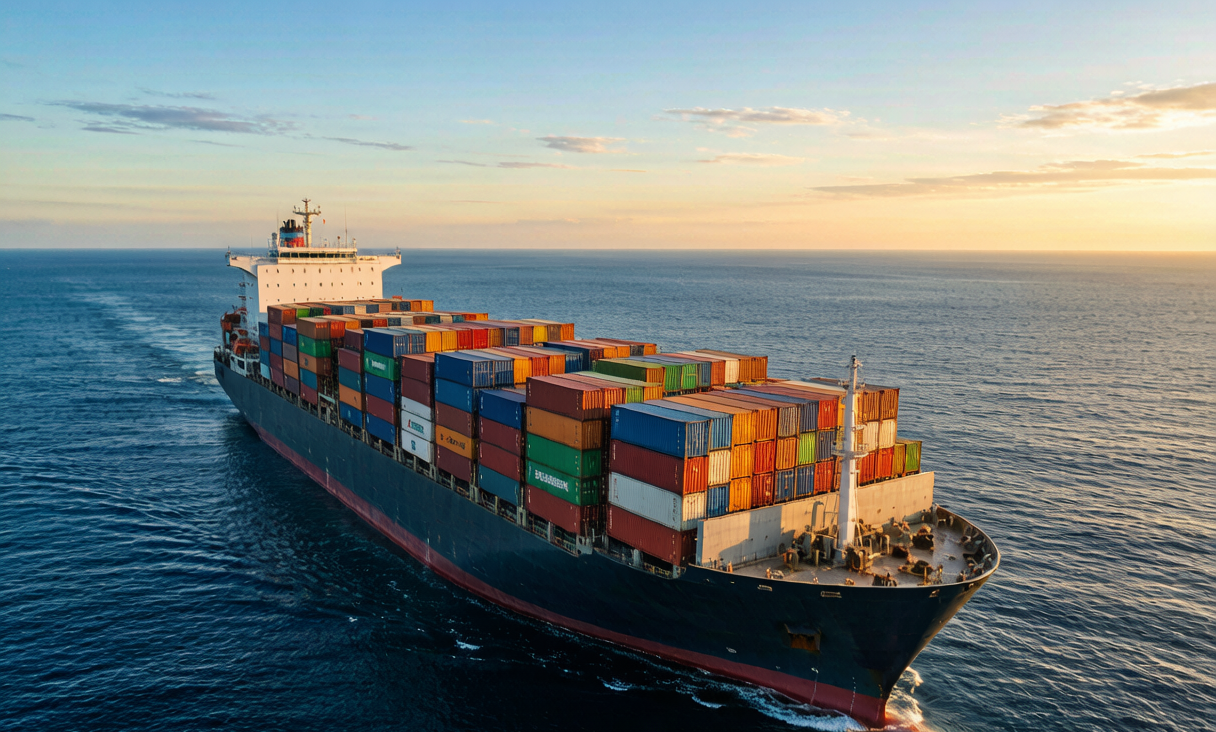
The headline number is simple: container throughput at the port is back to its pre-disruption baseline for the first time since the chaos began. Ships are moving, boxes are stacking in neat rows, and the backlog that once made headlines has melted away. Read the headline and you would think nothing had changed. Read the manifests, and you discover almost everything has.
The headline vs. the structure
Throughput is a measure of volume. It tells you how much moved through the gate, not where it came from or where it is going. And on those two questions, the picture has shifted dramatically. The share of cargo originating from any single dominant source has fallen. The share routed through any single dominant lane has fallen too. Trade has not shrunk. It has spread out.
This is the visible result of a quiet, multi-year campaign by shippers and manufacturers to reduce their exposure to any one bottleneck. During the disruption, companies discovered the hard way that "efficient" and "resilient" are not the same thing. A supply chain optimized to the last cent is also a supply chain with no slack, and no slack means one storm, one strike, one closed canal can cascade into empty shelves on the other side of the world. The cost of that slack now competes with other capital-allocation pressures, including the interest-rate environment that makes every dollar of inventory more expensive to hold.
What resilience costs
Building resilience is expensive. It means holding more inventory, which ties up capital. It means qualifying second and third suppliers, which doubles compliance work. It means routing some goods through slightly longer, slightly pricier lanes so that a single point of failure cannot bring everything to a halt. For years, executives resisted these costs because they showed up on the quarterly report as inefficiency.
"Before the disruption, resilience was a word in a slide deck. After it, resilience was a line item in the budget. That is the real change, and it is not going back."
The data now suggests those investments are sticking. Even as throughput recovered, the diversification did not reverse. Companies are not unwinding their backup suppliers the moment the crisis eased. They have decided, apparently for good, that some redundancy is worth paying for.
What it means going forward
For consumers, the practical effect is subtle: slightly less volatility in the things that matter most, at the cost of slightly higher prices baked into everything. For investors, the signal is clearer. The logistics companies that win the next decade will not be the ones with the biggest single terminal. They will be the ones with the most flexible networks, able to reroute a container around a closed strait without missing a delivery window.
The data also reveals a subtler trend: the goods themselves are moving differently. Inventory is being held closer to demand, in regional distribution hubs rather than mega-warehouses, and lead times are being quoted in ranges rather than single optimistic numbers. The supply chain has not just diversified geographically. It has, in a quiet way, grown more honest.
The port is busy again, and that is genuinely good news. But the more important story is that "busy" no longer means what it used to. The supply chain did not just recover. It learned.