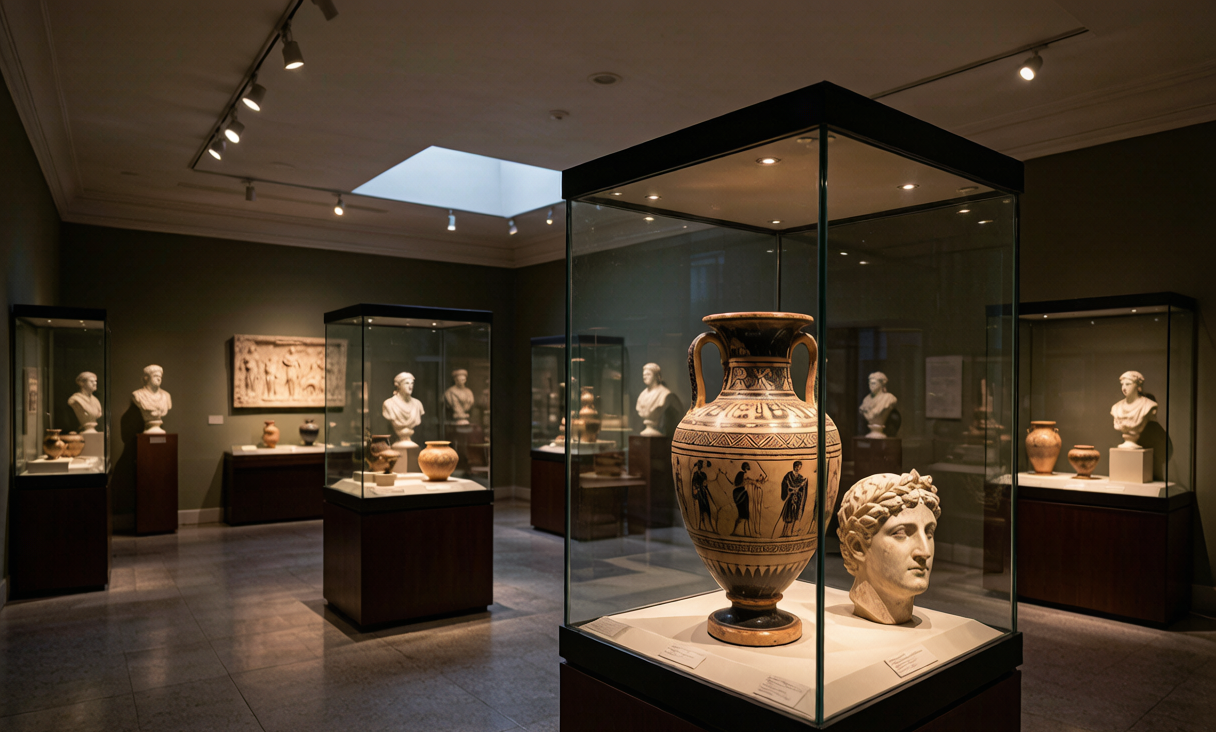
This week, a museum formally returned a set of restored artifacts to the community of their origin, capping a five-year provenance review and the start of a partnership for joint stewardship going forward. The handover itself was quiet, a small ceremony, a few crates, a signed document. But it is part of a much larger, slower reckoning that has been reshaping the museum world for nearly a decade, one that asks the most basic and uncomfortable question the field has ever faced: who does art belong to?
How the question changed
For most of the modern museum's history, the default answer was straightforward: it belongs to whoever holds it, and the holding is its own justification. Objects acquired during the colonial era, often under conditions that would today be plainly illegal, sat in collections whose labels discreetly omitted how they got there. The museum's framing was universal. The objects were, the argument went, in the safest possible hands, seen by the widest possible audience, cared for by the best possible expertise.
That argument had real force, and it still does. Conservation is genuinely hard, and many institutions have protected objects that might otherwise have been lost. But the argument also conveniently assumed that the people the objects came from were not, in fact, the best stewards of their own heritage. That assumption, once barely questioned, no longer holds the air it once did. The same institutions are simultaneously navigating the immersive art boom, which is testing whether "the widest possible audience" means what it used to.
What restitution actually involves
The popular image of restitution is a truck pulling up to a loading dock and driving away with crates. The reality is far slower and more interesting. A serious provenance review is archival archaeology: tracing an object's path through sometimes centuries of records, sales, bequests, and thefts, much of it undocumented or deliberately obscured. It can take years to establish with confidence how something was acquired, and longer still to negotiate what should happen next.
"Restitution is not the end of a relationship between a museum and an object. Done well, it is the beginning of a different one, in which the object goes home and the knowledge about it stays shared."
The handover this week is notable because of what came with it: not just the objects, but a formal partnership for joint stewardship, shared research access, and ongoing collaboration. That framing matters. It treats return not as a loss the museum suffers but as a correction that benefits everyone, including the museum, which keeps a relationship and a story rather than losing both. The same instinct to open doors rather than close them is what made the independent festival's record program possible: a willingness to rethink the gatekeeper's role entirely.
The larger shift
No one serious believes every object in every collection should go back to wherever it came from. The questions are too various, the histories too tangled, the practicalities too hard for a single rule. But the default has flipped. Where museums once had to justify returning something, they increasingly have to justify keeping it. That is a quiet revolution, and this week's quiet ceremony is one small piece of it. The crates have gone home. The harder work, of rethinking what a museum is for, is only just beginning.